
Desktop MFA for Secure Computer Login & Application Access
Desktop MFA adds stronger identity verification at the workstation and can protect connected corporate applications. It prevents a stolen or reused password from providing immediate access to company data. See how Hideez can secure computer login and application access across your organization.

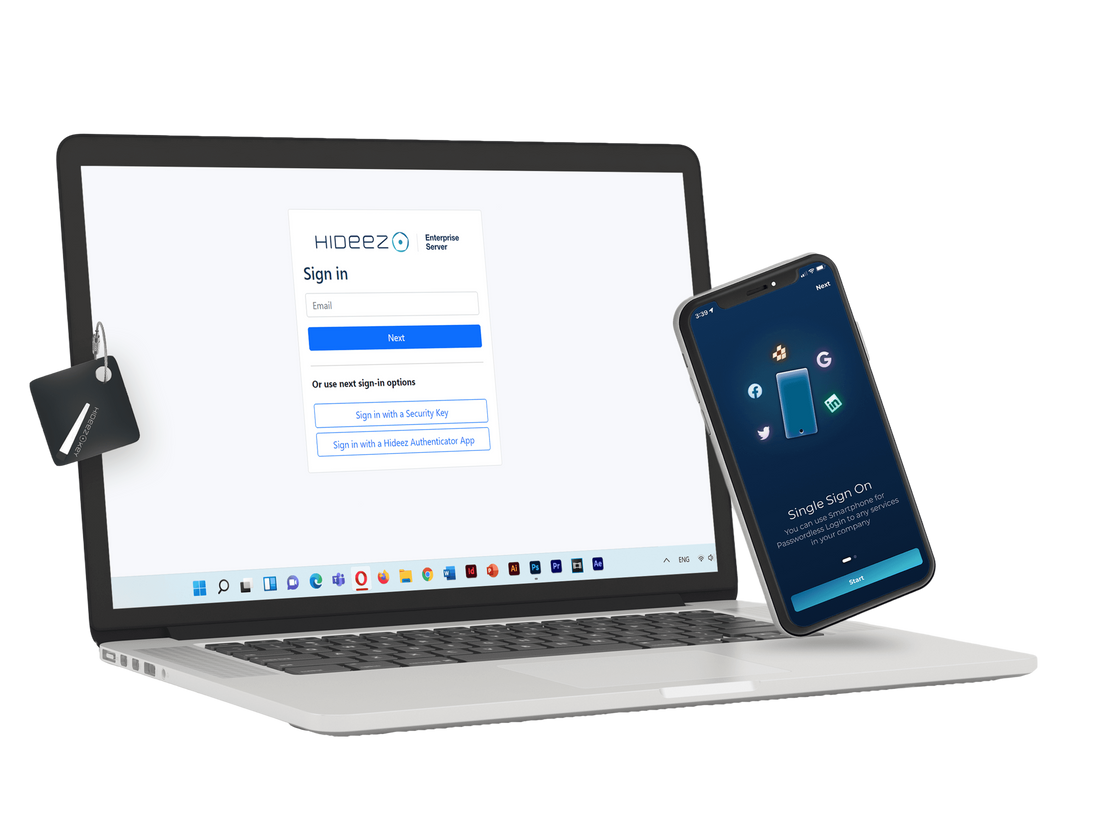
Secure Desktop Login with Multi-Factor Authentication
The purpose of MFA for desktop login is to verify a person’s identity before a managed Windows session opens. An organization can require a registered mobile authenticator or hardware security key instead of relying on a password alone. Hideez unifies workstation access, passwordless authentication, SSO, and administration. It also supports passwordless MFA, where the user proves possession of an approved device and confirms identity with a PIN or biometric check.
This is especially useful on shared and front-line computers. With shared workstation authentication, employees can use the same Windows workstation while each session remains linked to the person who opened it. Passwordless MFA for desktop logon also removes the need for passwords that can be obtained through phishing, reuse, or observation.
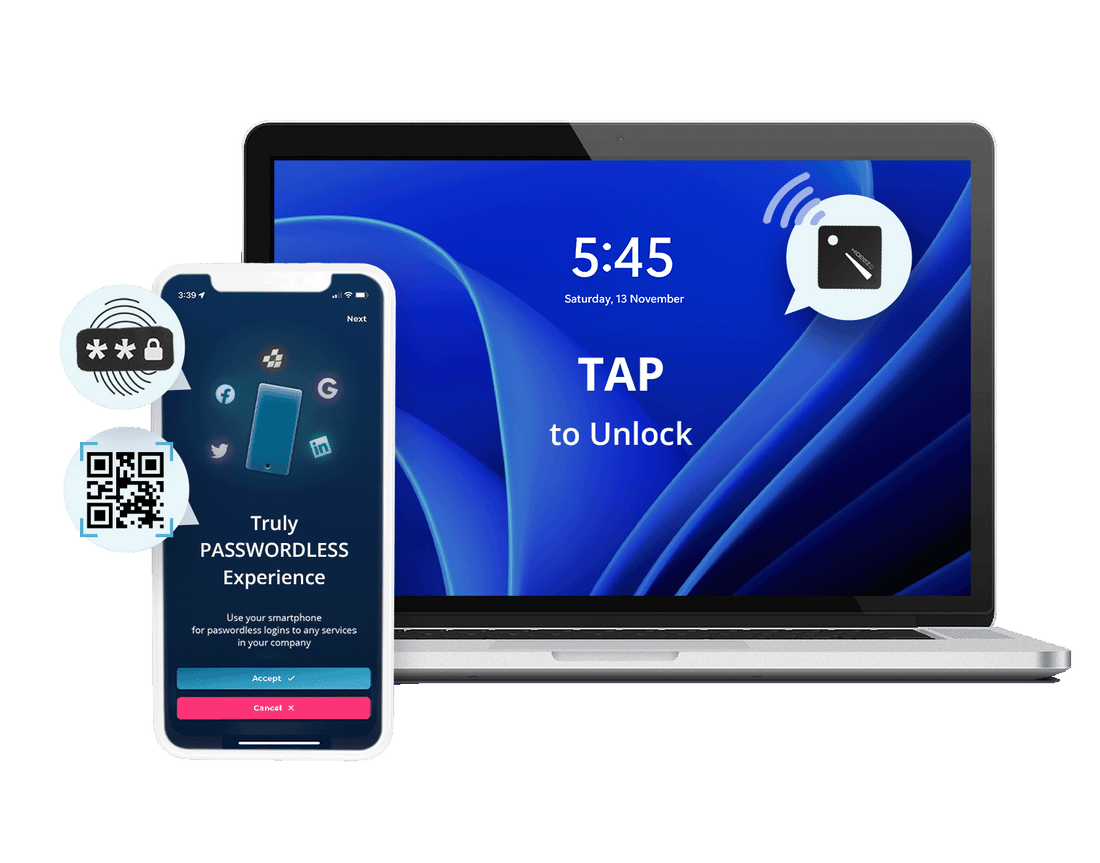
How Hideez Desktop MFA Works
Hideez Desktop MFA follows a three-step process that covers initial deployment, user verification, and continued access even in offline scenarios.
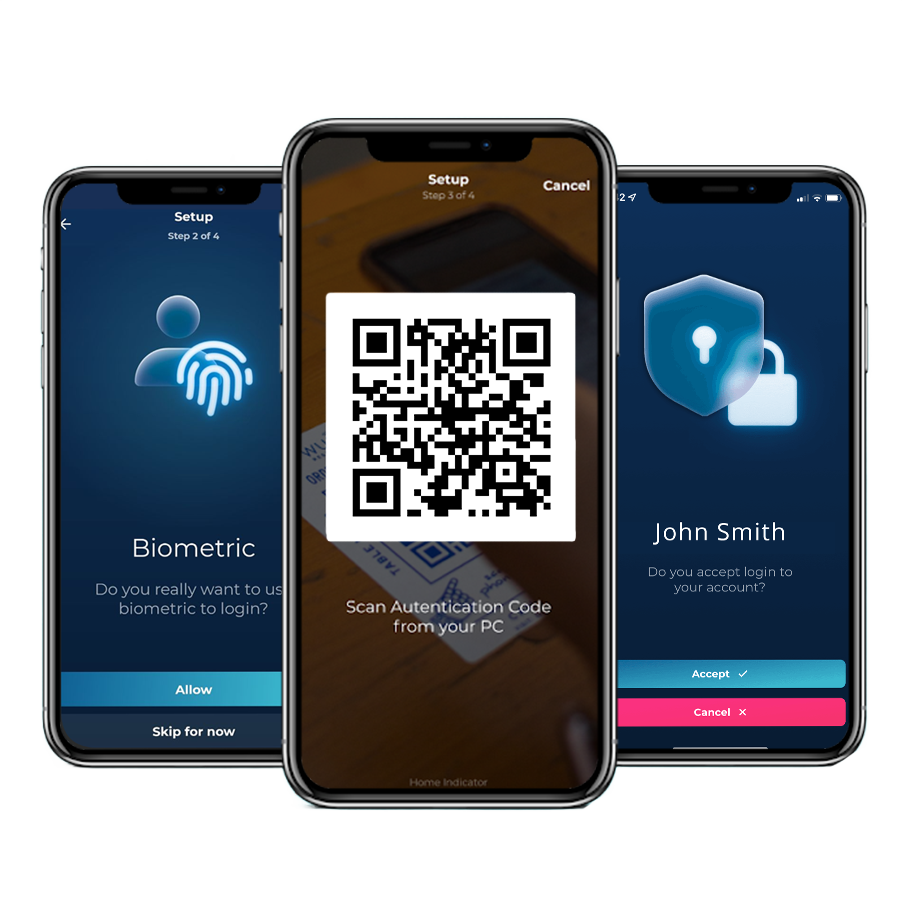
- Install Hideez Desktop and enroll users. An IT administrator deploys the Hideez Workforce Identity system and installs the Hideez Desktop application on managed Windows 10 or Windows 11 computers. Once users are enrolled, they choose and set up a preferred authentucation method (Hideez Authenticator mobile app or a Hideez security key). The phone or key then acts as a desktop authenticator associated with that user.
- Verify the user at sign-in. The user scans a QR code or performs NFC authentication using a mobile app, or authenticates with a hardware key via Tap&Go login or proximity-based authentication. Hideez validates the request before opening the Windows session and records supported events in a central audit log.
- Maintain access without an Internet connection. This desktop authentication flow can work offline. Hideez supports offline codes for Windows login, while Bluetooth and NFC can remain available without an Internet connection. A lost credential can be revoked and replaced by an administrator.
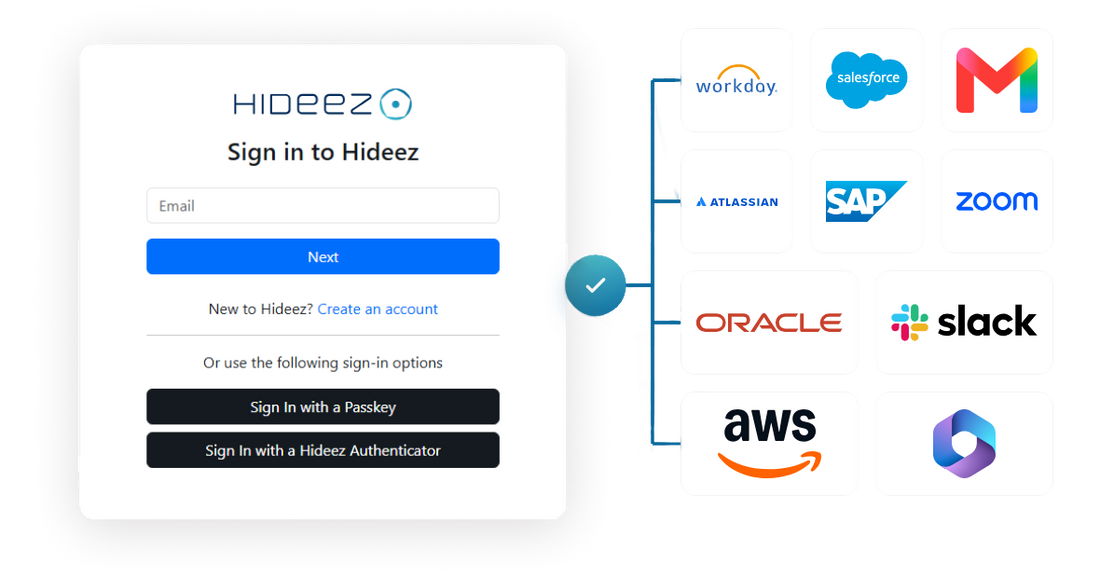
MFA for Desktop Applications
Protection can extend beyond Windows sign-in. Depending on the integration, MFA for desktop applications can control access to corporate web applications, remote services, and legacy web systems. Applications that support SAML 2.0 or OpenID Connect can connect through SSO, while Hideez AuthShield can protect legacy web applications that lack modern federation protocols.
Coverage depends on how an application authenticates users and connects to the company’s identity infrastructure. Integrated systems can require verification even when the user is already signed in to a computer. This helps protect corporate resources if a workstation is left unattended or an application credential is exposed. With passwordless SSO, employees can open authorized applications without repeated password entry.
Key Benefits of Desktop MFA for Business
Hideez helps businesses strengthen endpoint access while keeping authentication manageable:
- Reduces the risk of stolen or reused passwords.
- Supports named sessions on shared Windows computers.
- Enables passwordless login with a phone or security key.
- Centralizes management of users, credentials, and workstations.
- Can reduce password-reset requests when passwords are removed.
- Supports integrated web applications on Windows, macOS, and Linux.
| Password-Only Login | Passwordless desktop MFA | |
|---|---|---|
| Stolen password | May be sufficient for access | Requires possession of a desktop authenticator and verification with a PIN or biometrics |
| Shared workstations | Limited individual accountability | Supported sessions are linked to individual users |
| Audit visibility | Usually limited | Central records of supported authentication events |
| Phishing resistance | Low | Depends on the method; stronger with FIDO2 credentials |
| Administration | Password policies and resets | Central enrollment, policies, and revocation |
Desktop MFA Platform Features
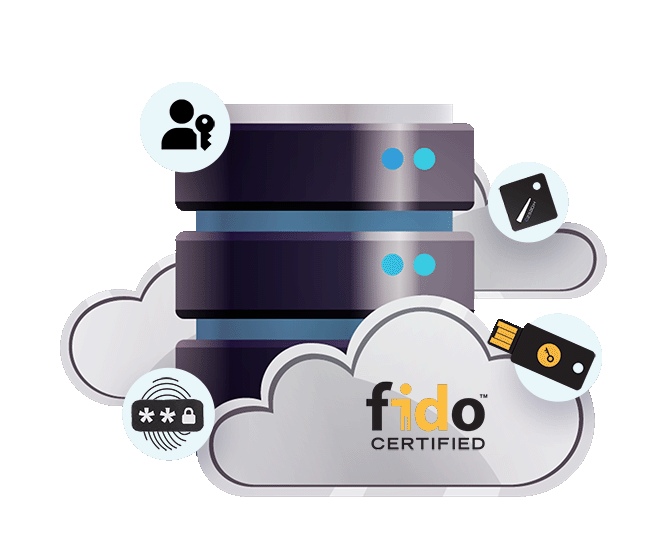
When evaluating desktop MFA platforms, businesses should distinguish between operating-system login and application access. Hideez protects login and unlock operations on managed Windows devices. Employees can access supported work accounts and web applications from macOS and Linux, but Hideez does not unlock those operating systems.
The platform centralizes users, credentials, access rights, workstations, and authentication records. Hideez can run in its cloud, a private cloud, or an on-premises environment. The Windows MFA desktop app is available as an MSI package for deployment through Group Policy or Microsoft Intune.
Why Choose Hideez for Desktop MFA?
Hideez combines mobile and hardware-based authentication with centralized identity management. Organizations can manage Windows workstation access, shared computers, SSO, and compatible legacy web applications from one environment.
It also provides a path from conventional MFA for desktop to passwordless authentication. Central revocation and session records help IT respond when a device is lost, an employee leaves, or access rights change.
FAQ
What is desktop MFA and how does it work?
Desktop MFA verifies more than one authentication factor before allowing workstation access. It can add another factor to a password-based flow or use passwordless MFA based on a registered device and a PIN or biometric check.
Can desktop MFA protect Windows login and logon?
Yes. MFA for desktop login protects sign-in and unlock operations on managed Windows 10 and Windows 11 computers. Hideez supports access to integrated accounts and web applications from macOS and Linux, but not operating-system login on those devices.
Can MFA be used to secure desktop applications?
Yes, when the application supports an appropriate integration. MFA for desktop applications can protect SAML 2.0 and OpenID Connect applications through SSO. Hideez AuthShield can extend authentication to compatible legacy web applications.
What is the difference between desktop MFA and passwordless authentication?
Desktop MFA describes multi-factor protection for workstation access. It may supplement a password or use a passwordless method. Passwordless MFA removes the password while still verifying at least two factors, such as a registered phone or security key and a PIN or biometric check.
How can businesses deploy Hideez desktop MFA?
IT teams install Hideez Desktop on managed Windows computers, connect it to the Hideez identity environment, enroll users, and assign supported authenticators. The MSI installer can be distributed through Group Policy or Microsoft Intune. Administrators then manage access and credentials from the central console.